AI-Driven Swift
Architecture
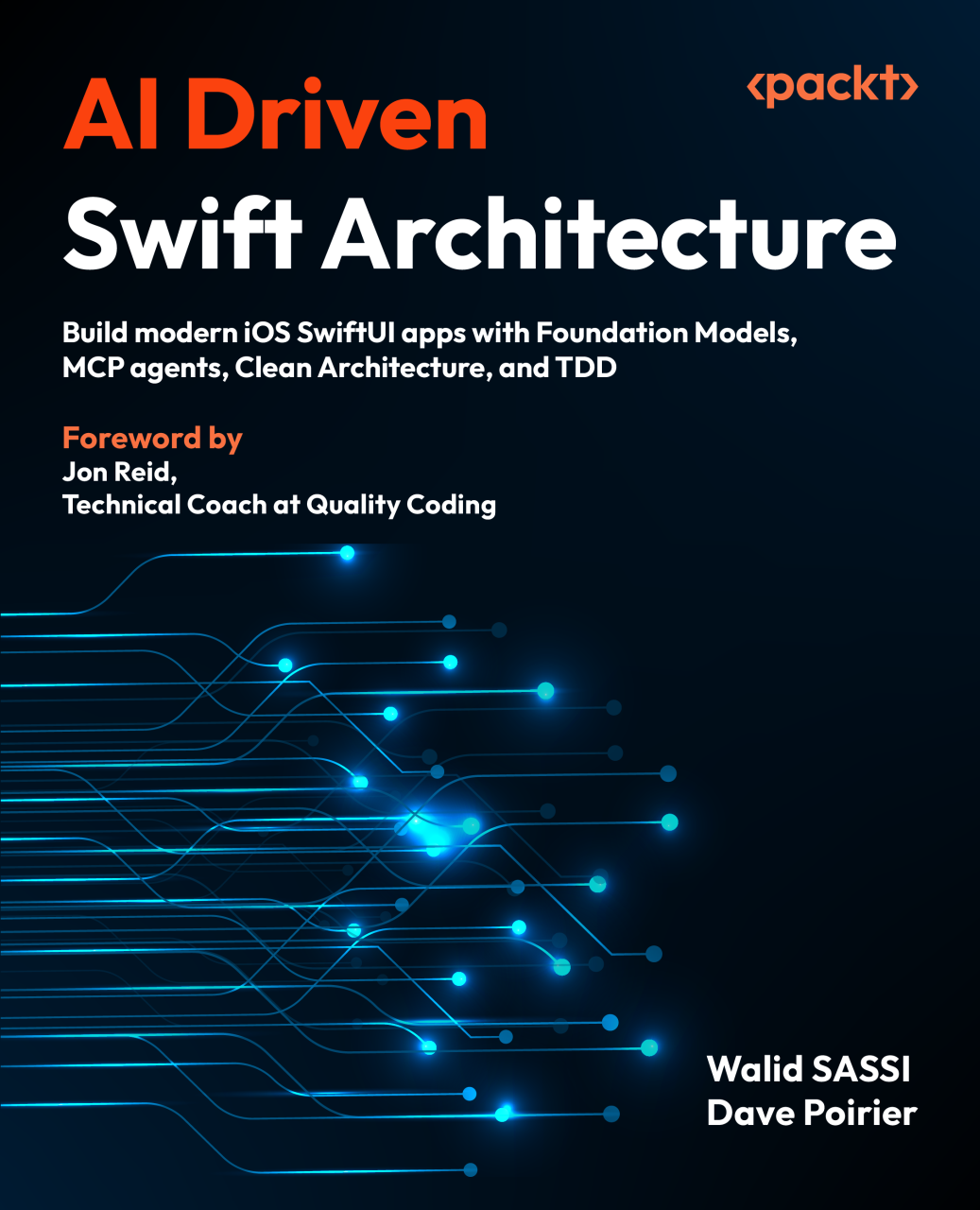
Build production-grade iOS apps with Swift 6, Clean Architecture, and AI as your engineering partner.
Foreword by Jon Reid · 9 chapters · Packt Publishing

Already in the Hands of Developers
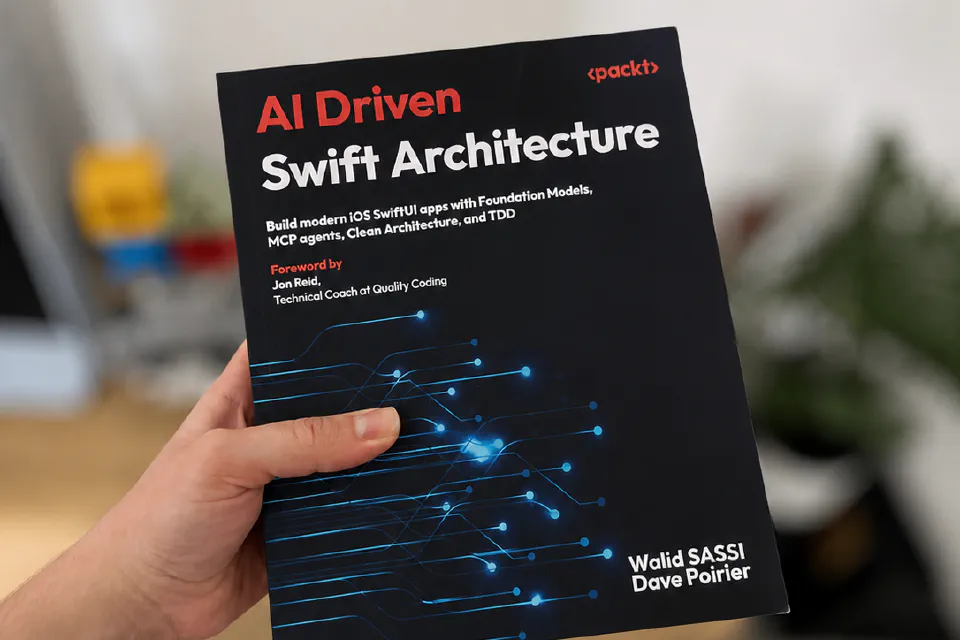
Real copies used by iOS developers.
Foreword by Jon Reid
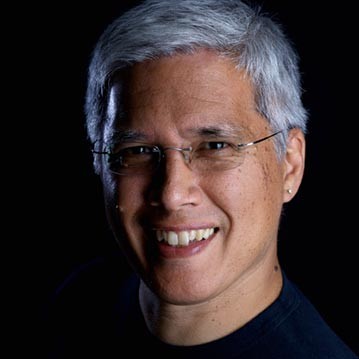
Jon Reid is the author of iOS Unit Testing by Example: XCTest Tips and Techniques using Swift and one of the most respected voices in Test-Driven Development on Apple platforms. His hands-on experience spans Apple, American Express, Adobe, eBay, and Walmart, applying TDD in real production codebases under genuine engineering constraints, not controlled examples. Through qualitycoding.org, he has spent years translating that experience into practical guidance, articles, videos, and talks that have shaped how a generation of iOS engineers thinks about code quality and sustainable delivery.
"They are the guides I didn't know I needed, writing the book I didn't know I was waiting for."
What experts say
Trusted voices from the iOS community on what this book changes for engineers.
- iOS Architecture
- Swift
- SwiftUI
- System Design
- Technical Leadership
A couple of weeks ago I was scrolling through my LinkedIn feed and came across posts from Walid SASSI and Dave Poirier. I had previously watched Walid's interview with Dave, which I really enjoyed and would definitely recommend, so when they shared that they had written a book together, I was genuinely excited.
AI-driven development is something you need to understand today. If you ignore it, you fall behind. This book does a great job helping to get oriented in this space.
It starts with the basics of working with AI, and then gets into the stuff that actually matters in real projects: TDD, architecture, AI inside applications, and agent workflows. There are also useful comparisons of models along the way.
The book answered many of the questions I had. The content is focused and straight to the point. It feels very timely, and I would confidently recommend it.
Definitely a must-read.

I’ve been following Walid and Dave for quite a while now and have loved all of their writings and postings. So when I saw they collaborated to write AI Driven Swift Architecture, I knew this was going to be fantastic (and timely).
This book is essential for any Swift developer (of any level) looking to solidify what Swift looks like in the age of AI. There’s no doubt about it, AI has disrupted everything and we’ll still be learning what that means for software development for years to come, but one thing is clear: everyone should be learning about and practicing the concepts in this book, today.
As a Lead, I’ll be recommending this to my developers, for sure.

Trying to make the most out of travel time. Just started AI Driven Swift Architecture by Walid SASSI & Dave Poirier.
Really keen to understand how AI is changing the way we build and architect apps. Excited to learn!
When you find a book that connects modern Swift architecture with AI in a way that feels practical and easy to apply, you know it’s worth it.
Definitely recommended for iOS developers who want to combine AI with solid Swift concepts.

I am reading AI Driven, Swift Architecture and I find it more than interesting.
Not the first time I have read Walid SASSI and Dave Poirier, they delivered again!

I might not be the first one posting a review of AI Driven Swift Architecture, but I do have a valid point: I read the book carefully, patiently, and with enough time to absorb the information. And with 500+ pages covering such a wide topic, that really matters.
My absolute kudos to Walid SASSI and Dave Poirier! They did a huge amount of work, both in time and materials, to make this book happen.
What I learned:
- Finally got a solid understanding of MCP
- Explored TDD with AI
- Learned how to work with large codebases and modularization correctly
- Better understood what SonarQube is and how it can help
- Saw ADR templates used in practice
For me, it took weeks to go through, but this knowledge will be applied for months (and I’m not saying years only because the whole sector is moving incredibly fast).

Just finished reviewing AI Driven Swift Architecture by Walid SASSI and Dave Poirier, and it’s a seriously well-structured deep dive into modern iOS development with AI in the loop.
What I liked most is how the book progresses, from setting up AI-powered workflows in Xcode, to mastering Swift Concurrency, TDD, Clean Architecture, and even integrating on-device foundation models and agent-based systems. It’s not surface-level content, it actually walks you through building production-grade thinking.
The sections on AI-assisted development, MCP, and architecture modernization stood out for being both practical and forward-looking.
If you’re exploring how AI fits into real-world Swift development (beyond the hype), this one is definitely worth your time. 🚀
Kudos to the authors for such a solid resource, and thanks to Sohini Ghosh & Packt for sharing it for review! 👏

I’ve just finished reading AI Driven Swift Architecture by Walid SASSI and Dave Poirier and I highly recommend it to all iOS developers.
The main idea I took from the book is that AI is not here to replace good developers. By itself, it can be surprisingly useful, but also clueless, incomplete, or too confident. In the hands of a professional developer, though, it becomes a real force multiplier. It helps explore ideas faster, removes repetitive work, and offers alternatives, while the developer still owns the decisions, architecture, quality, and final result.
What I liked most is that the book does not treat AI like magic. It builds automations on top of solid engineering practices: clean architecture, good design principles, tests, TDD, small steps, critical thinking, and proper code review. AI works best when it has these guardrails.
I also appreciated that this is not only a book about AI tools. Along the way, it teaches and reinforces important iOS concepts like Swift concurrency, SwiftUI best practices, refactoring, and TDD. The examples feel practical, especially when AI is used as a thinking partner to reason through trade-offs, edge cases, and design decisions.
The book also feels grounded in real experience. It shows what AI can do well, where it needs supervision, and why developer judgment still matters. For me, that was the biggest takeaway: AI can help us move faster, but it cannot compensate for a lack of solid engineering knowledge.
Overview
AI isn't replacing engineers, it's giving the best ones an unfair advantage. This book shows you how to work alongside intelligent tools to design, build, and ship iOS apps that are fast, testable, and built to last.
Starting from a solid foundation in Swift 6 Concurrency and Clean Architecture, you'll progressively integrate AI tooling into your workflow, from Claude Code for development to Apple Foundation Models for on-device inference. Every technique is grounded in production experience, not theory.
By the end, you'll have a complete system: a codebase that's modular, a workflow that's AI-augmented, and the judgment to know when to reach for each tool.
Who is this book for
Written for engineers who are past the basics and ready to raise the ceiling.
- iOS and Swift developers with at least one production app who want to adopt modern architecture patterns
- Engineers looking to integrate AI tools into their daily workflow without abandoning best practices
- Tech leads and senior developers responsible for codebase quality, testability, and long-term maintainability
- Swift developers curious about on-device AI through Apple Foundation Models and MCP
- Teams navigating the transition from UIKit to SwiftUI on existing, legacy codebases
What you will learn
- Apply Swift 6 Concurrency, actors, structured concurrency, and Sendable, in real production code
- Design layered iOS architectures using Clean Architecture and SOLID principles with SwiftUI
- Accelerate development with Claude Code: prompting strategies, review cycles, and AI-assisted TDD
- Integrate the Model Context Protocol (MCP) to connect AI systems with your app's context
- Integrate Apple Foundation Models to build private, on-device AI-powered features within the Apple ecosystem
- Migrate UIKit codebases to SwiftUI incrementally, safely, and without big-bang rewrites
- Write RFCs and ADRs that capture decisions and align teams before a single line of code is written
- Build a test-first culture with AI as a pairing partner, not a shortcut
Key topics covered
Swift 6 Concurrency
Actors, async/await, structured concurrency, and Sendable, applied correctly in production codebases.
SwiftUI + Clean Architecture
Layered, testable codebases built with SOLID principles and modern SwiftUI patterns.
AI-Assisted Development
Claude Code as a daily engineering tool, from architecture decisions to test generation.
Model Context Protocol
MCP fundamentals, how to give AI systems meaningful, structured access to your app's context.
Apple Foundation Models
On-device LLM inference with Apple Intelligence and MLX Swift, private, fast, no server required.
Testing + TDD with AI
Test-driven development accelerated with AI, writing better tests, faster, without cutting corners.
Legacy Modernization
Incremental UIKit to SwiftUI migration for real codebases, no big-bang rewrites, no regressions.
RFCs and ADRs
Engineering communication that drives alignment, decisions documented before they become debt.
Why this book matters
The tools changed. The fundamentals didn't.
AI as a collaborator
The most productive engineers aren't the ones who ignore AI, they're the ones who know how to direct it. This book treats AI as a pairing partner with clear boundaries, not a magic wand.
A shift in development workflows
From writing RFCs to running test suites, AI changes where human judgment is most needed. This book maps that shift in concrete, reproducible workflows you can adopt today.
Production-ready, not theoretical
Every pattern and technique comes from real iOS projects. No academic exercises, no greenfield toy apps, just the decisions that matter when code ships to real users.
What readers are saying
Real reactions from developers reading the book on Amazon and LinkedIn.
This is one of the most interesting and coolest programming books I have ever seen! It is not just a “click here, do this, now do that, and here are the results…” type of book. Yes, it has some tutorials that you can follow along with like most programming books, but it is just so full of content.
Read the full review
It ranges from teaching you App Architecture, with the help of AI. But not just “click here and AI will do this” — it goes deep into the architecture part as well as what exactly AI is doing when you ask the question, and how AI works on the back end. It is very easy to follow and well written, as if the author is sitting right there with you.
The book even discusses a few “gotchas” when it comes to AI pricing and token use and what to look out for. It does an amazing job at showing you how to install each type of AI system with lots of diagrams and examples. I have been using AI for several months now and learned a lot of things!
The author discusses many topics that I have never heard of or have only heard a little about, which I hope to read more about as I fully digest this book. Topics like Actor Isolation, Mutex, and testing concepts like TDD and TPP.
Then there is just a ton of information on AI itself: MCP servers both on machine and online, AI code review techniques, refactoring techniques, even the newer agentic coding.
A lot of programming books seem to just echo documentation you can find on Apple’s site, or are similar to books A, B and C, but this one is so packed full of data it will give you a lot to learn for quite some time. With tons of pages packed full of info, you will be very happy with this! I can’t say enough good about it!
I really enjoyed reading Walid SASSI’s and Dave Poirier’s book, AI Driven Swift Architecture.
This book takes an agnostic approach to recommending AI agentic code and Large Language Model (LLM) vendors. It offers a plethora of examples from each of the current main vendors.
Read the full review
The software industry as a whole is experiencing an epochal change. This book, for Apple developers, is a very specific prescription to navigate this change.
For Apple developers who are still not acquainted with AI in software development, this book offers a solid, fundamental grounding in the technical aspects of LLMs, tokens, agent skills, and Apple Foundation Models. The first chapter familiarizes Apple developers with the new, natively integrated dedicated LLM panel in Xcode 26.
The book also addresses an important topic: what should an Apple developer do when AI models disagree? How do you resolve and understand the different solutions? Practical examples, like fixing data race conditions with Xcode, are presented throughout the book.
It also introduces using the Model Context Protocol (MCP), a bidirectional communication protocol between AI models and external systems. Another topic covered is how to create a pull request using Claude.
These new AI tools introduce a level of chaos within an Apple developer’s life. The authors propose one way to handle this chaos: adopt a test-driven development approach with AI and Claude Code. They devote an entire chapter to this proposal.
Apple Foundation Models are on-device LLMs. The core idea behind them is to provide language models that are privacy-first, secure by design, and deeply integrated in the operating system. In an exercise toward the end of the book, the authors walk the reader through implementing a stdio-based MCP server in Swift.
In the final chapter, the authors introduce AI-assisted reviews, RFCs, and governance, exploring native AI assistants within Xcode 26.3 and extending those agents with custom skills. They propose adopting AI into a holistic software engineering workflow rather than using it as an isolated code generation tool.
As an Apple developer, the world of AI-assisted agentic development is just beginning to be explored. I contend that this book is a worthy field guide to begin exploring that world.
This book is a great guide for senior developers who want to stay ahead of the curve. Finally, a book that treats AI as a real architectural partner rather than just autocomplete.
Already read the book? Help other developers find it, share your review.
About the Authors

Walid Sassi
Lead iOS EngineerWalid Sassi is a Lead iOS Engineer with over a decade of experience building large-scale mobile applications. He has led critical architectural transformations, including clean architecture adoption and checkout system redesigns in production environments. Walid is also the host of the Swift Academy podcast, where he collaborates with leading experts from the Apple ecosystem worldwide. His work focuses on scalable architectures, developer productivity, and modern iOS engineering practices.

Dave Poirier
iOS & Security ExpertDave Poirier is an expert in iOS development and software security with more than 25 years of experience in the software industry. He specializes in secure application design, reverse engineering, and advanced Apple platform development. Dave brings deep expertise in building resilient and secure systems.
Technical Review
Reviewed for code quality, architectural consistency, and real-world applicability.

Achraf Trabelsi
Technical Leader · Oodrive, ParisAchraf Trabelsi is a Technical Leader with over 10 years of experience in iOS development. He has reviewed the technical content of this book to ensure high standards of code quality, architectural consistency, and real-world applicability in production environments.
Find us online
More content, episodes, and writing across the Swift ecosystem.
Order your copy today.
Now available on Packt and Amazon, in print and digital editions.